Magnolia Rastegar
Reselling a used diesel car aged 5 to 15 years is getting harder due to the Brussels LEZ and Euro emissions standards. Analysis and advice from AUTOMIUM Laeken
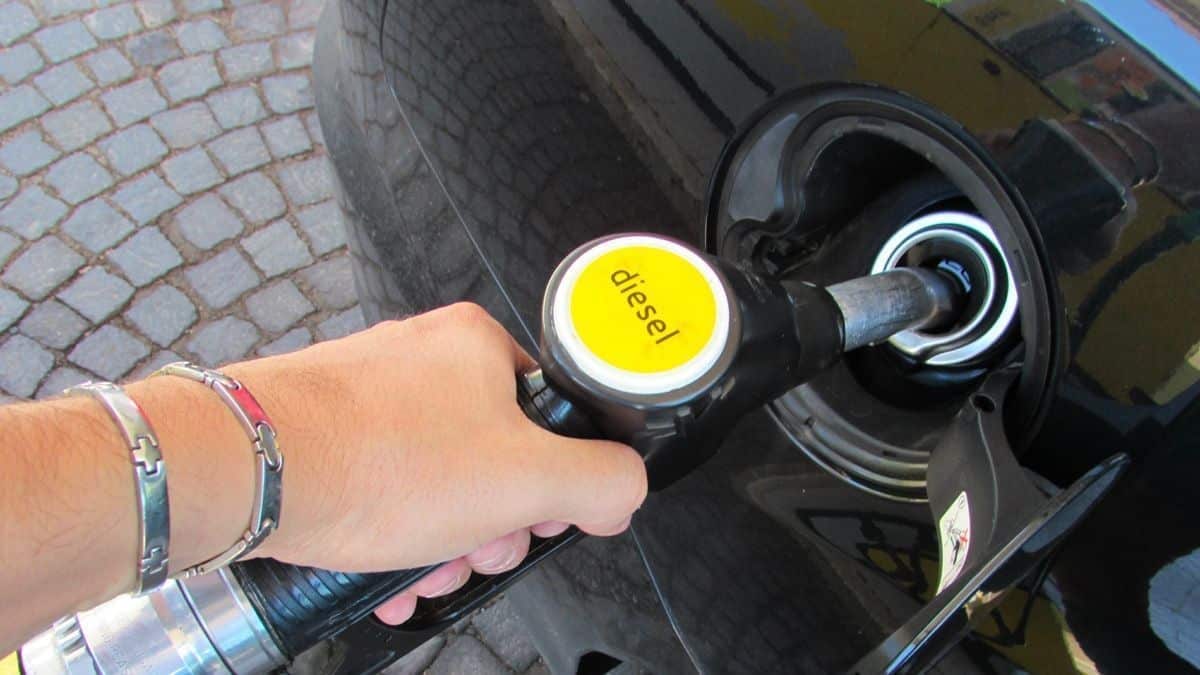
For a long time, the used diesel car was a safe bet. Many drivers looked for a used diesel for its low fuel consumption, its robustness, its engine torque and its comfort on the motorway.
A diesel car was often seen as the best choice for high-mileage drivers, families, the self-employed, sales reps and professionals who covered a lot of distance.
But today, the market is changing.
The question many owners ask themselves is simple: is it still easy to resell a used diesel car?
The answer is more nuanced than before. Diesel isn't dead, but reselling a diesel car is becoming more complicated, especially for vehicles aged 5 to 15 years.
A recent article in L'Automobile Magazine summed up this trend well: good luck to those who need to resell a used diesel car aged 5 to 15 years. This matters because what happens on the French car market often influences the Belgian car market, particularly in Brussels, where the Brussels LEZ already weighs heavily on the value of diesel vehicles.
At AUTOMIUM Bosch Car Service in Laeken, we closely follow the used car market, car trade-ins, used car sales, price trends for used vehicles and buyers' changing habits.
And the finding is clear: the used diesel car market is entering a new period.
The problem doesn't affect every diesel. A good Euro 6 diesel car, well maintained, with consistent mileage and a full history, can still sell very well.
But a used diesel car aged 5, 8, 10 or 15 years can become harder to resell for several reasons.
The first reason is fear of driving restrictions.
In France, drivers are talking more and more about ZFE, the low-emission zones. In Belgium, the main topic is the Brussels LEZ, the low-emission zone. In both cases, used car buyers no longer look solely at price, mileage or mechanical condition.
These questions have a direct impact on the price of a used diesel car.
Even if the vehicle is clean, well maintained and pleasant to drive, a buyer may hesitate to purchase a diesel out of fear of the LEZ, the ZFE, future bans or depreciation.
Let's be very clear: diesel isn't disappearing.
Many drivers still need a used diesel car. For someone who drives a lot on the motorway, takes long trips, and doesn't drive daily in an LEZ or ZFE zone, diesel can remain a smart solution.
A used diesel car can still be appealing for high-mileage drivers, the self-employed, sales reps, families who cover a lot of distance, drivers who mostly drive outside cities, people looking for a car that's economical to run, and customers who want a comfortable car for long journeys.
But the market is becoming more demanding.
A diesel car with incomplete maintenance, high mileage, an unfavourable Euro standard, average bodywork, or a less sought-after model becomes harder to sell.
In the past, many diesels sold almost automatically. Today, a diesel sale needs to be prepared, well argued and correctly priced.
In the past, when a customer wanted to buy a used car, they mainly looked at the price, mileage, year, general condition, brand, maintenance, roadworthiness inspection and warranty.
Today, an essential criterion must be added: the vehicle's Euro emissions standard.
A Euro 6 diesel car doesn't have the same value as a Euro 5 diesel car. A Euro 5 diesel doesn't have the same value as a Euro 4 diesel. And in a city like Brussels, this difference can become enormous.
The Euro standard directly influences trade-in value, sale price, ease of resale, buyer interest, depreciation risk, access to Brussels, access to major cities, and the vehicle's commercial lifespan.
At AUTOMIUM, when we assess a diesel car trade-in, we don't just look at mechanical condition. We also analyse the Euro standard, resale potential, current demand, future demand and compatibility with LEZ rules.
The Brussels LEZ and the French ZFE don't work in exactly the same way, but they produce the same psychological effect on buyers.
The customer wonders whether they're buying a car with no restrictions or one that's already limited.
That's where the market shifts significantly.
Someone looking for a used diesel car often wants a reliable and economical vehicle. But if that car risks being banned in Brussels, Antwerp, Ghent, Paris, Lille or other major cities, the buyer will negotiate harder or move to a different vehicle.
So the issue isn't just mechanical. It's also regulatory and psychological.
Even a very good diesel can lose value if the buyer thinks it will be difficult to use or resell.
This is probably the most important question for many owners: should I sell my diesel car now or wait?
The answer depends on several factors.
If your diesel car is recent, well maintained, Euro 6, with reasonable mileage, there's no particular urgency.
But if your diesel car is older, Euro 5 or below, if you often drive in Brussels or in a low-emission zone, or if you're thinking of changing cars within 12 to 24 months, it may be worth getting a valuation for your diesel car now.
Waiting can sometimes prove costly.
On the car market, a vehicle doesn't always lose value gradually. Sometimes value drops sharply when a new restriction is introduced, when demand falls, or when buyers turn away from a particular engine type.
That's exactly what can happen with certain used diesels.
For a garage, handling a diesel car trade-in isn't as simple as it used to be.
In the past, the focus was mainly on condition, mileage, brand and market price.
Today, you also need to analyse the Euro standard, the impact of the Brussels LEZ, local demand, export potential, demand in France, demand in Belgium, future value, resale speed, the risk of tied-up stock, and competition from petrol, hybrid and electric cars.
A poorly bought diesel can sit in stock for a long time. A well-bought diesel can still sell very well.
The difference lies in market analysis.
At AUTOMIUM Bosch Car Service, we assess every used diesel car with a professional approach: mechanical condition, maintenance, Car-Pass, history, Euro standard, customer demand, trade-in value and resale potential.
On the Belgian used car market, petrol vehicles remain highly sought after. A used petrol car is often seen as simpler, more reassuring and less exposed to restrictions than diesel.
Hybrid cars are also attracting more and more buyers. For many customers, a used hybrid car seems like a good compromise between fuel consumption, comfort, an eco-friendly image and ease of resale.
This doesn't mean diesel should be abandoned. But it does mean diesel needs to be seriously compared with petrol, hybrid and electric.
The right choice depends on the driver's profile.
A customer who drives 8,000 km a year in the city probably doesn't need a diesel. A customer who drives 35,000 km a year on the motorway may still benefit from a good diesel. A customer who makes short daily trips and can charge at home might consider an electric car. A customer who wants to keep a car for a long time without stress could turn to petrol or hybrid.
The used electric car is attracting more and more customers. Prices are becoming more accessible, there are more models available, and buyers are starting to better understand range, charging and battery condition.
But a used electric car shouldn't be bought just because it's electric.
You need to check battery condition, real-world range, battery warranty, repair costs, parts availability, model reliability, the after-sales network, resale value, depreciation speed and the customer's actual usage.
An electric car can be an excellent solution for a customer who charges at home, mostly drives in the city, or makes regular, predictable journeys.
But for some customers, an electric car can also become a burden if range, charging or budget don't match their usage.
In recent years, Chinese electric cars have taken up an increasingly important place in Europe.
Brands such as MG, BYD, Leapmotor, XPeng, Omoda, Jaecoo and others offer modern electric cars, often well equipped, at attractive prices.
For many customers, a Chinese electric car seems like a very good deal. It often offers a lot of equipment for a price lower than an equivalent European brand.
But the used car market doesn't just look at the purchase price.
It looks mainly at future value.
And that's where caution is needed.
The big issue with used Chinese electric cars is depreciation.
A Chinese electric car can be very appealing when new, but the question is: how much will this Chinese electric car be worth in 3 years?
Will it be easy to resell? Will the after-sales network be solid? Will parts be available quickly? Will the brand still be present in Europe? Will used car buyers trust this model?
These questions are essential.
A Chinese electric car can be an opportunity if the price is fair, the warranty is solid, the after-sales network is well structured and the brand inspires confidence.
But a Chinese electric car can also become a trap if it loses value too quickly, if parts are hard to obtain, or if the brand doesn't yet have a strong image on the used car market.
The arrival of Chinese electric cars doesn't only concern customers who want to buy a Chinese car.
It influences the entire car market.
When a new Chinese electric car arrives with plenty of equipment at an aggressive price, it puts direct pressure on European electric cars, hybrid cars, recent petrol cars, recent diesel cars, recent used vehicles, trade-in prices and residual values.
This means the used car market is becoming more complex.
A customer who wants to buy a used car now compares a diesel, a petrol car, a hybrid, a European electric car and sometimes a Chinese electric car.
The role of a professional garage is therefore to help the customer make the right choice, not just the cheapest one.
Buying a used car in 2026 bears little resemblance to buying a used car 10 years ago.
In the past, buyers could focus on general condition, mileage and price.
Today, you need to look much further: the engine type, the Euro standard, the Brussels LEZ, the French ZFE, warranty, maintenance history, running costs, fuel consumption, resale value, depreciation, range for an electric car, battery warranty, the after-sales network, parts availability and how the market is evolving.
A good used car isn't just a clean, cheap car. It's a car that matches the right usage, the right budget and the right moment in the market.
If you want to sell your diesel car, here are the most common mistakes to avoid.
The first mistake is overestimating the value of your diesel. Many owners base their expectations on prices listed online, but a listed price isn't a sold price.
The second mistake is waiting too long. If your diesel is affected by the LEZ or a future restriction, its value can drop faster than expected.
The third mistake is not preparing the car. A clean, well-maintained diesel with invoices, Car-Pass, roadworthiness inspection and full history will always sell better.
The fourth mistake is ignoring the competition. Today, your diesel car is competing with petrol, hybrid, electric and even attractively priced Chinese electric cars.
The fifth mistake is selling without a professional valuation. A proper valuation tells you the real value of your car, not just what you assume it's worth.
At AUTOMIUM Bosch Car Service in Laeken, we know the used car market in Brussels, the trade-in market, the used diesel market, as well as how petrol, hybrid and electric cars are evolving.
We can help you answer the real questions: what is my diesel car worth right now? Is this the right time to sell my diesel? Is my car affected by the Brussels LEZ? Will my Euro 5 diesel keep losing value? Is a trade-in more worthwhile than a private sale? Should I switch to petrol, hybrid or electric? Is a Chinese electric car a good idea? Which used car should I buy with my budget? Which engine type should I choose to avoid a poor resale?
Our goal is simple: to help you make a smart decision.
The car market is changing rapidly.
Used diesel is becoming more selective. Petrol remains sought after. Hybrid reassures more and more buyers. Electric is growing. Chinese electric cars are shaking up prices. LEZ and ZFE zones are influencing buying decisions. Resale value is becoming an essential criterion.
In this context, buying or selling a car without proper analysis can prove costly.
A good deal today can become a bad resale tomorrow. A cheap car can end up costing a lot in depreciation. A diesel car can still be worthwhile if it matches the right profile. A Chinese electric car can
be an opportunity if it's well chosen. A petrol or hybrid car can be the best compromise for certain drivers.
So there isn't a single right answer. There's a right answer for every driver.
Used diesel isn't dead. But a used diesel car needs to be bought, sold or traded in with more caution than before.
Diesel resale is becoming harder for certain models, especially diesel vehicles aged 5 to 15 years, Euro 5 diesels, Euro 4 diesels, and vehicles affected by driving restrictions.
At the same time, the used electric car market is growing, Chinese electric cars are arriving in force, and buyers are paying closer attention to depreciation, warranty, running costs and future value.
At AUTOMIUM Bosch Car Service in Laeken, we help you assess your car, estimate its real value, understand the market and choose the best solution: sell, keep, replace, trade in, or buy a new used car.
Before selling your diesel, before buying a Chinese electric car, or before replacing your current car, take the time to ask for professional advice.
Feedback
Tell us what you think about this article and rate your experience.